
Thermal Delta system for heating air
Thermal air Delta system
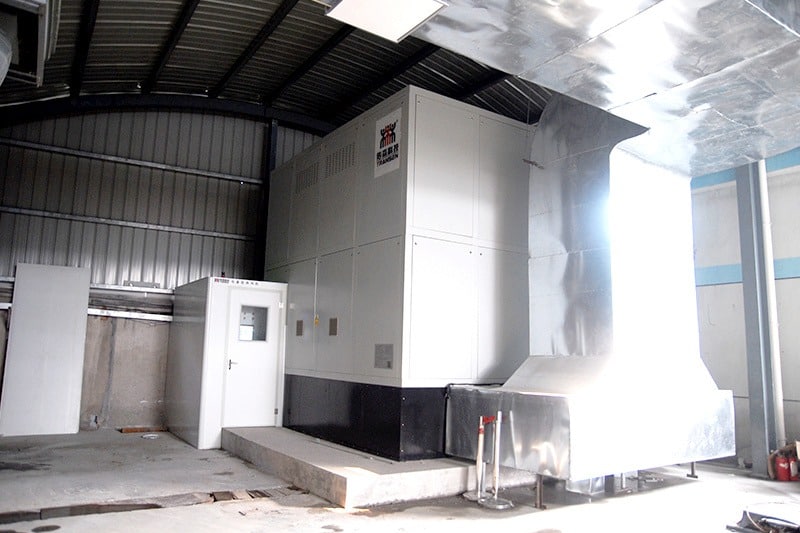
The Delta thermal air system uses cheap off-peak electricity – typically at night – or surplus power from wind power to convert electrical energy into stored thermal energy. When heat is needed, the system delivers hot air at temperatures up to 400°C with a precision of ±1°C, ensuring stable and efficient operation.
The operating principle is simple: Cold air passes through the system, where it is heated before being supplied to the heat-consuming process.
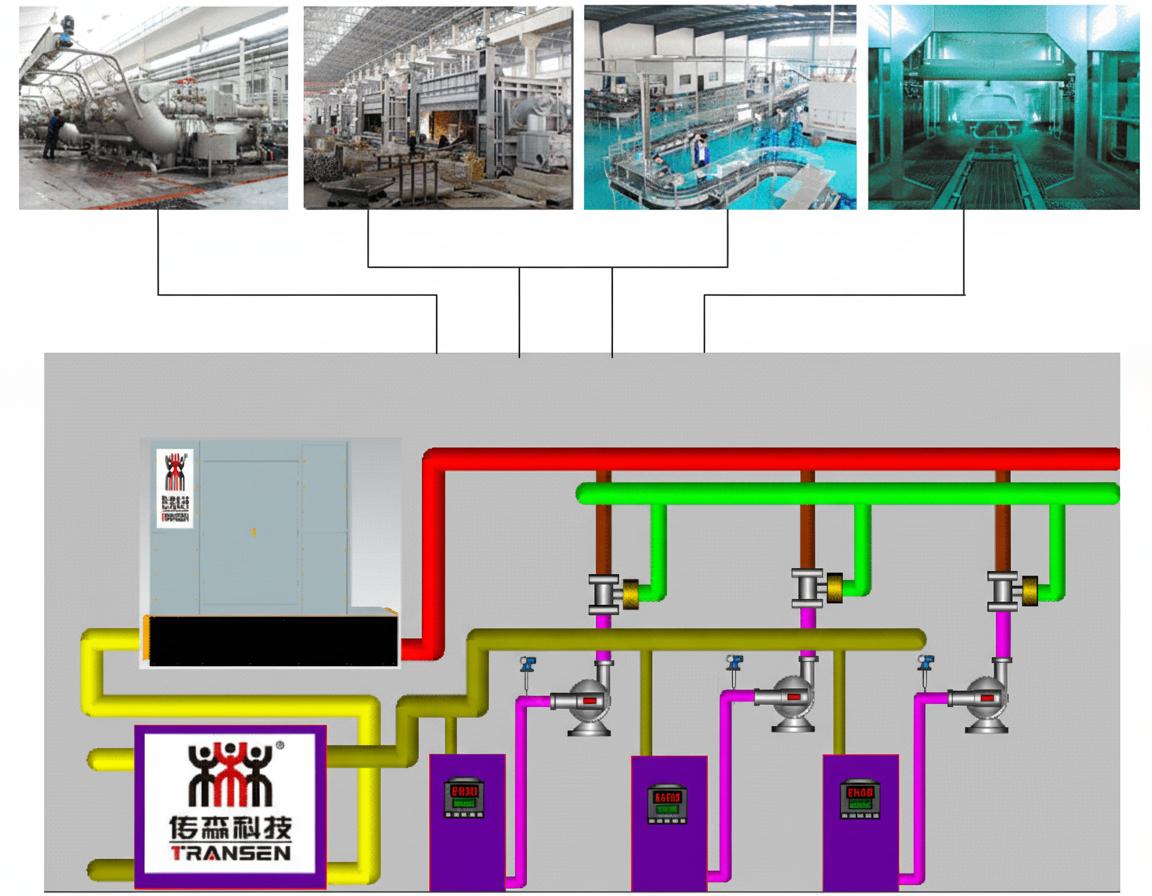
This solution is widely used in industries such as food production, automotive production, printing, chemical industry, papermaking, rubber, pharmaceutical industry, petrochemical industry and metallurgy – ideal for processes that require precise and high-temperature air, such as industrial drying processes.
Benefits and features
The system stores heat in a solid alloy that can reach up to 750°C, breaking the traditional temperature limit for heat storage – while maintaining a safe operating condition.
- High efficiency
Specially developed insulation materials minimize heat loss and ensure an overall efficiency of over 95%. - Compact design
The system takes up only 10–14% of a traditional system, significantly reducing the need for floor space. - Fully automatic control
No manual monitoring required. The system automatically heats up during off-peak periods and releases heat when needed. - Zero emissions
Clean resistance heating without pollution and completely free of CO₂ emissions – unaffected by the climate.
Product use
Energy storage and heating air supply units are widely used in a wide range of industries including food production, automotive manufacturing, printing, chemical industry, paper making, rubber, pharmaceutical industry, petrochemical industry and metallurgy. These units are ideal for processes that require precise and efficient heating of air, ensuring both high temperature control and energy efficiency in industrial applications.
Energy storage device for heating air
Operating principle of energy storage and hot air unitOperating principle of energy storage and hot air unit
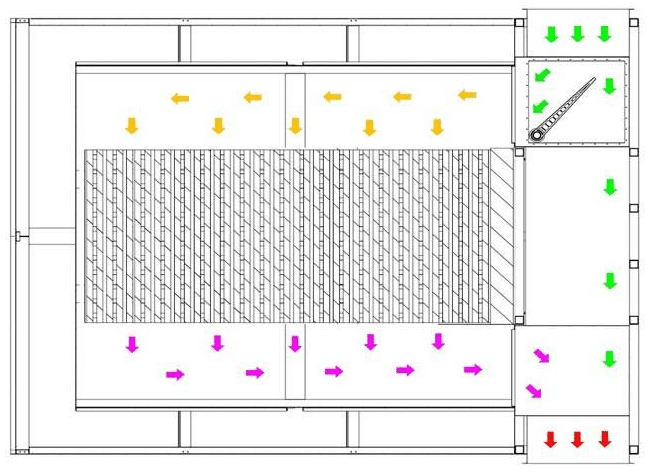
As shown in the diagram on the left, the system uses cheap off-peak electricity at night to convert electrical energy into stored heat. When heat is needed, it can supply hot air to heat-consuming businesses at temperatures below 400°C with an accuracy of ± 1°C. Cold air passes through the energy storage heating unit from right to left (as shown by the arrows in the diagram), during which the cold air is heated.
As shown in the schematic diagram, the energy storage device uses cheap electricity or wind power generated during off-peak hours at night to convert electrical energy into high-temperature thermal energy and store it in the device’s thermal storage unit.
When heat is needed, the fan runs, causing air to flow through the heat accumulator in the thermal boiler.
The heat in the heat accumulator is converted into high-temperature hot air. After passing through the heat exchanger, the high-temperature hot air is mixed with heat transfer oil and supplied to the heat-consuming unit.
WANT TO HEAR MORE? CONTACT US
Transportbuen 5A, 4700 Næstved
+45 60 19 33 44
niels@powernight.eu
GREEN
With magnesium bricks as the main storage factor in our products, you no longer have to worry about environmentally harmful effects when heating. The conversion process in our units is based on natural materials and sustainable use, completely free of CO2 emissions - for a greener everyday life.
AFFORDABLE
At PowerNight we are built on a vision of green, efficient and stable energy at affordable prices. That is why all our products are built on the same heat storage structure, where you as a customer do not have to pay for the costs during high consumption periods. This means that you avoid the high daytime prices and can benefit from the stored heat collected at night.
SIMPLE
Our groundbreaking heating technology is based on the surplus flow from wind turbines. The heat is collected, stored and used efficiently, without complicated techniques or procedures. Our systems regulate themselves, depending on where there is the most surplus flow, so you can get the best yield at all hours of the day - without all the hassle.